Eatons Concise History of Worcester, ends the account of the opening of the tomb with this macabre story: 'On the opening of the Tomb of King John in the Cathedral, a gentleman of this city took a hand-full of the skeletons of skins of maggots that were in and about the abdomen of the body and angled with them in the Severn, and absolutely caught a brace of bleak with them'.
The King's tomb was moved in to a new location in the Cathedral which in doing so destroyed the very reason for it being there at all. The last restoration in 1874 was done by the Board of Works, who are responsible for all the royal tombs, and insensitively destroyed the remnants of colour that remained and gilded the whole figure, placing on it's head a tin crown.
Arthur, Prince of Wales, the son of Henry Vlll, was as a boy of eleven, betrothed to Catherine of Aragon, of the same age, in a Machievellian attempt to control foreign affairs of state. Two years later, they were married by proxy, the ceremony on Arthur's side taking place in the chapel of Twickenhill Palace at Bewdley on Whit Sunday, 1449. Catherine came to England two years later, and she and Arthur both 15, were married in St. Paul's Cathedral, and went to spend their honeymoon at Ludlow Castle. At the end of two months, on April 2nd, 1502, Arthur died.
The body was embalmed and a great procession brought the young prince to Worcester Cathedral for burial. It was one of the greatest scenes of pomp and ceremony ever witnessed in our Cathedral, and one of the most moving. The chronicler wrote:
"but to have seene the weepinge when the offringe was done, he had a hard heart that wept not".




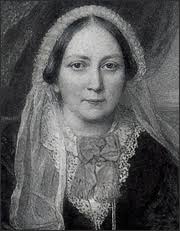 The story of Mrs. Henry Wood is one of the great success stories of the 19th century. She was born during the great frost of 1814 and a century later 6,000,000 copies of her books had been sold (not counting pirate copies and her huge contribution to magazines).

